When brands start comparing 3PLs, warehouse count becomes a talking point fast. More locations sound like more coverage. More coverage sounds like faster shipping. Faster shipping sounds like a better product. But none of that is automatic.
What actually determines the quality of your fulfillment experience (your accuracy rates, your SLA consistency, your ability to get a straight answer when something goes wrong) is not how many locations a 3PL has. It’s how those locations operate. Specifically: whether they’re running the same technology, the same processes, and the same trained teams everywhere, or whether each location is effectively its own operation stitched loosely together.
The difference matters more than most brands realize before they sign.
Ready to see what consistent fulfillment actually looks like? Get a quote.
The 4PL model and why “more locations” can mean more problems
Some 3PLs expand their geographic footprint not by building or leasing their own facilities, but by partnering with a network of independent warehouses, a model often called 4PL or fourth-party logistics. The idea is appealing: an asset-light provider can offer coverage across dozens of locations without the capital investment of owning them.
The complications are structural, not incidental.
Each independent warehouse in a 4PL network runs its own operation. Its own warehouse management system. Its own staff, trained by its own management to its own standards. Its own processes for receiving, picking, packing, and shipping. Its own protocols for exceptions, damages, and escalations.
When your orders route across that network, they’re not being fulfilled by one company. They’re being fulfilled by whichever facility happens to be handling that node, with whatever system that facility runs, at whatever standard that facility holds itself to.
The practical consequences:
Accuracy rates vary by location. A facility in the network that has a 98% pick accuracy is performing differently than one at 99.8%, and you may not know which one is handling your orders on any given day.
Reporting is inconsistent. When inventory data, order statuses, and exception logs are generated by different systems and aggregated after the fact, the picture you see in your portal is a summary, not a source of truth. Reconciling discrepancies often means reaching through your 3PL to a facility you’ve never spoken to.
Escalation gets complicated. When a packout issue, a missing unit, or a receiving error needs to be resolved, the path is: you, then your 3PL, then the partner facility. The partner facility has no direct accountability to you and may have limited accountability to your 3PL. Response times reflect that.
Pricing can shift without warning. Partner facilities may have their own cost structures that feed into what you’re charged. A network with 40 locations doesn’t necessarily mean 40 locations with the same rates.
What an owned-and-operated network actually means
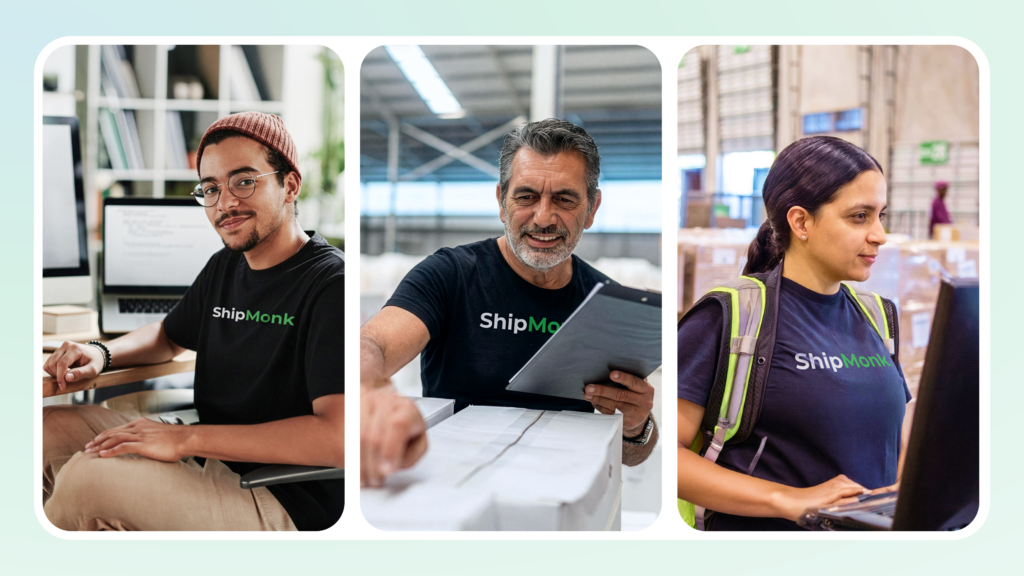
ShipMonk builds its own technology, trains its own teams, and operates every facility it leases directly. That distinction is simple and it changes everything downstream.
One technology platform. Every ShipMonk facility runs the same proprietary warehouse management system. Your inventory data, order history, return records, and performance metrics are generated by the same system whether your orders are fulfilling from Las Vegas, Louisville, Dallas, or Pittston. There’s no aggregation across disconnected systems. Real-time means real-time.
Standardized training. Every team member in every ShipMonk facility is trained to the same standards, using the same methods. The pick-and-pack process in Pennsylvania follows the same protocol as the one in Nevada. The QC workflow is identical. The packout spec your brand sets is applied the same way regardless of which node fulfills the order.
Consistent pricing across the network. Cross-network pricing is standardized. You pay the same rates at every ShipMonk facility. When an order routes to a different node than expected (because inventory ran low at your primary location, or because demand spiked in a new region) the economics don’t change on you.
One accountable partner. When something needs to be resolved, the path is: you, then ShipMonk. Not you, then ShipMonk, then an unnamed partner facility. ShipMonk owns the operation, which means ShipMonk owns the outcome.
The performance numbers that follow from consistency
ShipMonk’s 99.95% order accuracy and 99.8% on-time shipping rates aren’t metrics that emerge from luck or volume. They’re the result of the same process, executed the same way, everywhere.
In a fragmented network, even if the average accuracy across all partner facilities is high, variance is your real risk. A brand shipping from five different partner warehouses might have two excellent facilities and three mediocre ones. The average looks fine. The customer experiences reflect the full range.
Consistency is what you’re buying when you choose an owned network. Not just a number, but a floor that holds across every location, at every volume, throughout the year.
The zone economics still matter
None of this means warehouse location is irrelevant, it’s very much not. Shipping cost in the US is zone-driven, and the difference between shipping from a regional node versus a cross-country one can be $4-$8 per parcel or more.
A brand moving from a single West Coast location to an East/West split can realistically expect 8-12% reduction in average transport cost and a 2-2.5 day improvement in transit time for customers on the opposite coast. Those are real numbers with real impact on margin and customer experience.
Geographic coverage and operational consistency aren’t in tension. You should have both. A network that’s geographically distributed but inconsistently operated trades one problem for another. The goal is coverage you can actually rely on.
See exactly why each warehouse was chosen
When you’re shipping from multiple facilities, understanding how routing decisions get made is part of trusting the operation. ShipMonk now surfaces that logic directly.
For any order, a new warehouse resolution view shows exactly which facility was selected and why. Not just the result, but the mechanics behind it: the factors the system evaluated, the inventory positions it weighed, and the reasoning that produced the assignment. You can see the logic, not just the label.
For brands managing multi-node fulfillment, this kind of transparency closes the gap between “the system routed this order” and “I understand why.” It’s easier to optimize, easier to audit, and easier to trust the routing decisions that are happening across your network every day.
The question to ask before you commit
When a 3PL pitches you on their warehouse network, ask one follow-up question: “Are all of these facilities owned and operated by you, or are some of them partner locations?”
If the answer involves partner networks, ask what WMS those facilities run, how performance data is aggregated, and what the escalation path looks like when something goes wrong at a partner location.
The answers will tell you whether you’re buying a network or a map of a network. The difference shows up in your accuracy rate, your customer service inbox, and your confidence when you scale into a new region.
ShipMonk builds its own technology, trains its own teams, and operates every facility it leases directly. More warehouses isn’t the goal. Better warehouses are.
Ready to see what consistent fulfillment actually looks like? Get a quote.