
ShipMonk Apparel Engine
Photo Proof on Every Return
Every returned item is documented, graded, and actioned so you always know what came back and what it’s worth.
Trusted by leading brands to simplify returns & boost loyalty












Returns are expensive. Not knowing what's coming back? That costs even more.
Without visibility, returned inventory sits in limbo or worse, gets restocked incorrectly. ShipMonk gives you the documentation and workflows to turn returns into margin recovery.
Proof Gap
"I returned it in perfect condition." You're looking at a damaged item with no tags.
Without a photo taken at receiving, you have no proof. The dispute goes in the customer’s favor. You absorb the loss.
What you’re missing:
Visual proof of item condition at the moment it entered your facility.
Grading Inconsistency
When returned items aren't graded consistently, your inventory numbers lie.
Items that can’t be resold get counted as available stock. Customers order them. Cancellations follow. Your CX team inherits the fallout.
What you’re missing:
Grading is standardized and consistent across all shifts.
Rework Capacity
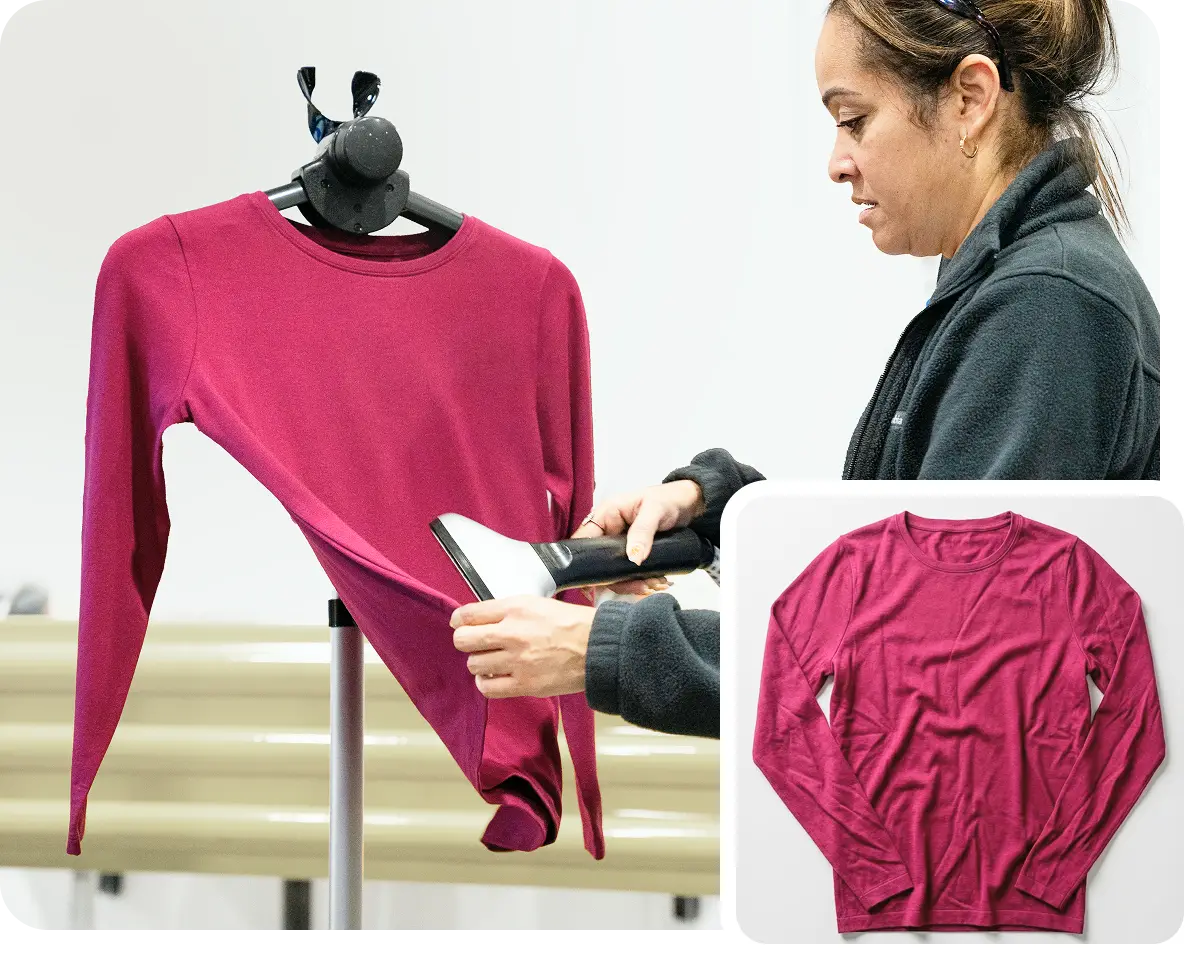
60–70% returned garments just need steaming, refolding, or retagging.
Without proper documentation, returned items often sit unused or get written off. A well-run returns process ensures items are recovered instead of lost.
What you’re missing:
In-house rework to recover inventory.
Built in, not bolted on
Quality Guard is photo documentation built directly into ShipMonk's receiving and returns workflows. The photo is captured at the moment the issue occurs, before the item moves, before the record closes, and before the question gets asked.

Quality Guard
Every item photographed at receiving automatically
Our system can capture photo documentation for each non-new returned item at intake. You always have a timestamped record of condition.

Grading Standards
Every returned item graded against a consistent standard
Items are assessed using your grading criteria — so restocking decisions are consistent and auditable. Grade A (restock immediately), Grade B (rework or discount), Grade C (liquidate or dispose)
Explore Grading Standards

In-House Rework
Salvageable items don't just sit, they go to rework
60–70% of returned items go straight back to available inventory after rework: steaming & refolding, retagging & re-barcoding, polybag replacement, hanger add/removal, spot cleaning, basic defect repair (loose threads, missing buttons).
Explore Rework

You always know where every return stands
Real-time RMA status keeps you and your customers informed at every step — no chasing, no guesswork. Automatic status update sent when RMA is logged. Your CX team knows it’s in the system without having to ask. Customers get confirmation their return was received. No “where’s my return?” inquiries that your team can’t answer
Explore Returns
Book a returns strategy call
The returns operation built for apparel
15+ RMAs
processed per labor hour
60–70%
of returns go straight back to available inventory after rework
100%
of non-new returns photographed automatically
$249K/year recoverable from returns at scale
Based on a brand doing 1,000 returns/month at $35 avg item value — with 60% restock rate.


Most 3PLs weren't built for apparel return rates
| Feature | ShipMonk Recommended | Other 3PLs |
| Photo proof on returns | Every item | Rarely included |
| Standardized grading | Consistent standard, customizable | Ad hoc or manual |
| In-house rework services | Steam, retag, rebag, refurbish, spot clean | Outsourced or unavailable |
| Automatic RMA arrival status | Automatic notification on arrival | Limited visibility |
| Recovery rate | 60–70% back to available inventory | Unknown (no rework) |
| Dispute resolution time | Minutes (photo proof in portal) | Days (no proof) |

Apparel Returns Management - FAQs
How does Quality Guard's photo documentation actually work?
When a returned item arrives at ShipMonk, it’s logged into our system and photographed at the receiving station — automatically, not on request. The photo is attached to the return record and accessible in your ShipMonk portal the same day. You can pull it up anytime — during a dispute, for analytics, or to verify condition before deciding whether to rework or dispose of the item.
What grading standards does ShipMonk use for returned apparel?
ShipMonk uses a five-tier grading scale: New (unopened, tags attached), Like New (worn once or tried on, minimal wear), Good (light wear, resellable), Fair (visible wear, may need rework), and Unsellable (damaged, stained, or missing components). This grading is applied consistently across all shifts and facilities. Customizable grading standards are launching soon, so you can define what each tier means for your specific brand.
What rework services does ShipMonk offer for returned apparel?
ShipMonk’s dedicated rework stations at KY2 can handle steaming, refolding, retagging, polybag replacement, re-barcoding, hanger add/removal, spot cleaning, and basic defect repair (loose threads, missing buttons, etc.). The goal is to get recoverable items back to sellable condition and into your available inventory — not written off. Our recovery rate is 60–70% of returned items going straight back to available inventory after rework.
How quickly do returns get processed and back into available inventory?
ShipMonk processes 15+ RMAs per labor hour. For items that don’t need rework (returned in new or like-new condition), they go straight to putaway and are back in available inventory within 24–48 hours. Items that need rework go through our rework queue and are typically back in stock within 3–5 business days, depending on the service required.
Does ShipMonk integrate with Loop Returns or other returns platforms?
Yes. ShipMonk integrates with Loop Returns, one of the most widely used returns platforms for DTC apparel brands. This means your Loop-managed return flows connect directly to ShipMonk’s receiving, grading, and rework processes — giving you a seamless end-to-end returns experience without manual reconciliation. We also integrate with Returnly, AfterShip Returns, and other platforms. Custom API integrations are available for brands using proprietary returns systems.
What happens to items that can't be recovered or resold?
Items graded as Unsellable are flagged for disposal or liquidation, depending on your preferences. You can configure disposal rules in your ShipMonk portal — for example, “donate items graded Fair or better, dispose of Unsellable items,” or “hold all Unsellable items for monthly liquidation batch.” Quality Guard photos document the condition, so you have a record of why each item was written off.
How much does Quality Guard cost?
Quality Guard is included in ShipMonk’s standard returns processing for apparel brands for receiving discrepancies. It comes with a per-unit cost for non-new return photos. Contact our apparel team for a customized quote based on your return volume and rework needs.