
No one wants to talk about inbound until something goes wrong.
When a brand evaluates fulfillment partners, the conversation usually centers on outbound: shipping speed, carrier mix, accuracy rates, packaging. Inbound barely makes the pitch deck. But every order a 3PL ships has to come in first, and the operational discipline between a supplier dropping freight at the dock and that inventory being available for outbound orders is where a meaningful amount of cost, time, and friction lives.
Brands learn this the hard way. A delayed receiving means inventory sitting in a staging area instead of being available for orders. Manual receiving labor gets billed back. ASN discrepancies compound into reconciliation work weeks later. A non-compliant inbound triggers special project fees the merchant didn’t budget for. None of these problems are abstract — they show up as billing surprises, inventory exceptions, and frustrated support check-ins.
This post walks through how inbound receiving actually works at ShipMonk: what we accept, where the common failure modes are, and what levers brands have to make their inbound process faster and more predictable. If you’re evaluating a 3PL, treat this as a checklist of questions to ask anyone you’re considering. If you’re already a ShipMonk merchant, it’s a map of what’s happening behind the scenes and where you have control over your own outcomes.
What arrives at our dock
ShipMonk receives freight in several configurations, and the way a shipment is structured at origin dictates a lot about how it gets processed when it arrives.
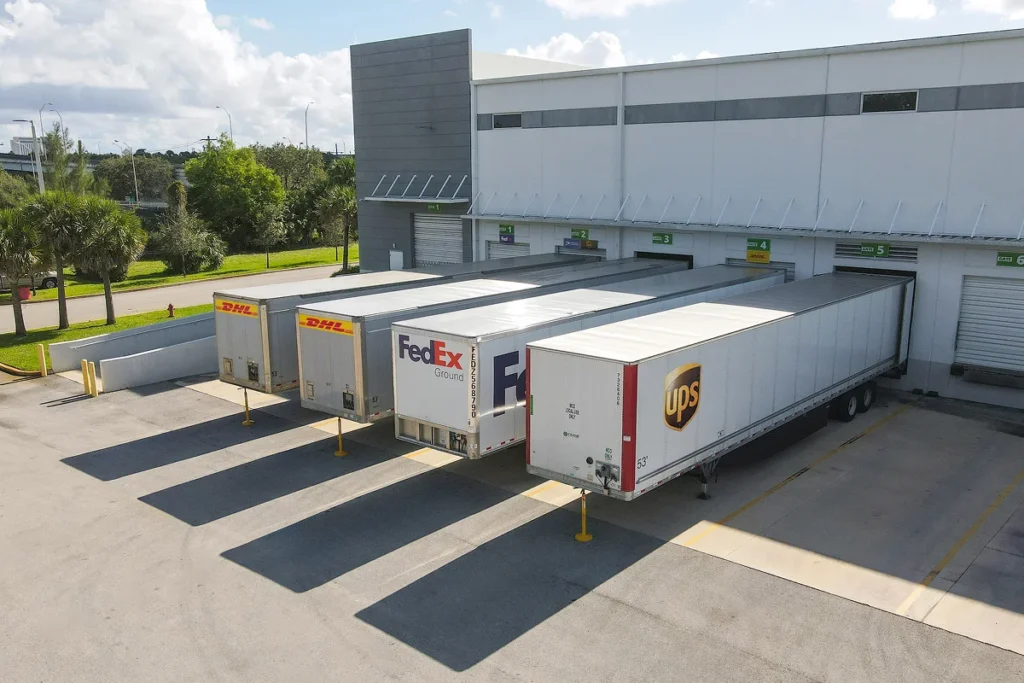
Small parcel inbounds arrive via carriers like UPS, FedEx, and USPS, typically one or several boxes at a time. These are the simplest from a receiving perspective: no appointment needed, no dock scheduling, straightforward intake. They’re also the most common for brands sending replenishment from a distributed supplier network or forwarding samples.
Palletized freight is the workhorse configuration for mid-market and enterprise brands. LTL (less-than-truckload) shipments arrive on pallets, typically as replenishment runs from a manufacturer or contract warehouse. These require dock scheduling, appointment coordination, and structured receiving against an ASN. Whether pallets are single-SKU, mixed-SKU, or layered with both affects how long receiving takes and what verification is required.
Container freight arrives at port and gets transloaded to ShipMonk facilities. For brands importing from overseas suppliers, container receiving is the bridge between the international supply chain and domestic fulfillment. These can be palletized or floor-loaded.
What we accept, the configurations we support, and the appointment requirements for each are documented in ShipMonk’s Receiving Guidelines. The short version: most reasonable inbound configurations are supported, and the more upfront notice and structure a merchant provides, the better receiving flows.
The ASN: telling us what to expect
The Advance Shipping Notice (ASN) is the document that tells ShipMonk what’s coming, when, and what’s in it. Every shipment a merchant sends should have a corresponding ASN created before the freight arrives. This is non-negotiable infrastructure: an ASN is what lets our receiving team verify what physically arrived against what was supposed to arrive, and it’s what triggers the workflow that puts inventory away and makes it available for outbound orders.
A complete ASN at ShipMonk includes:
- Warehouse destination. Which facility the shipment is going to.
- Category. What kind of receiving this is (standard PO/ASN, inventory transfer, etc.).
- ASN number, supplier, estimated delivery date. Identification metadata that lets us match physical freight to expected inventory.
- Handling units. How the product is arriving: boxes, pallets, or other configurations.
- Tracking numbers. Every tracking number associated with the shipment, which lets us match carrier check-in and dock arrival events against the ASN automatically.
- Product details. SKU, expected quantity, lot number (for lot-controlled SKUs), expiration date (for expiration-controlled SKUs), and barcode information.
- Documentation. Bill of lading, packing list, commercial invoice, or any other documents that help our receiving team verify the merchandise.
The full step-by-step walkthrough lives in our Creating a Receiving Order support doc. The thing to internalize is that ASN completeness is the single biggest lever a merchant has over their own receiving speed. A complete, accurate, on-time ASN is the difference between a smooth dock-to-stock process and a manual exception that consumes labor on both sides.
Tracking numbers and arrival visibility
ShipMonk matches tracking numbers on the ASN against carrier check-in and dock arrival events in real time. When a merchant enters their tracking numbers at ASN creation, every package gets a visual check-in indicator that updates as it arrives, with timestamps and event source (manual, carrier scan, or DataDocks dock scheduling) recorded for each.
The practical effect: a merchant who enters tracking numbers at ASN creation has real-time visibility into when their shipment is hitting our dock, without needing to ping support for updates.
This is the kind of operational visibility that’s table stakes at a sophisticated 3PL but often missing at less mature operators. If you’re evaluating a fulfillment partner, ask how they surface arrival data and whether you can see it without filing a ticket.
At the dock: how receiving actually happens
Once freight arrives, the receiving process runs against the ASN. There are two paths it can take depending on what data the merchant provided.
Standard receiving
For most ASNs, our receiving team scans each carton as it comes off the truck or pallet, confirms quantity, checks for lot or expiration data against what the ASN specified, and routes the inventory to its appropriate destination. Lot-controlled and expiration-controlled SKUs require this data to be captured at receipt, and our team validates what physically arrived against the ASN’s expected values. Any discrepancies are photographed and uploaded to the ASN for visibility and reconciliation support.
SSCC carton receiving
For merchants whose suppliers already apply GS1-128 SSCC labels to their cartons (the barcodes commonly used for retail compliance with channels like Walmart and Target), ShipMonk supports them. When SSCC data is pushed onto the ASN through a merchant’s integration, our team scans a single SSCC barcode and the system receives every SKU and quantity associated with that shipment. This works for both single-SKU cartons and mixed-SKU cartons, with a guided confirmation flow for multi-product boxes.
The mechanic matters because it eliminates the manual line-by-line confirmation step on cartonized freight that’s already structured for fast receiving. The labels suppliers are applying for retail compliance do work at the ShipMonk dock — not just at the retailer’s.
For the brands this applies to, the operational gains are real: faster dock-to-stock time, fewer manual errors, full carton-level traceability from supplier to putaway. For brands whose suppliers don’t yet apply SSCC labels but could (typically anyone shipping to a major retail channel), it’s worth asking whether the labeling work can happen at the source.
Good faith receiving and verification
ShipMonk’s receiving model operates on a “good faith” assumption: we trust that the quantity of SKUs listed on each carton matches what’s actually inside. Manually opening and re-counting every carton would multiply receiving labor by an order of magnitude and isn’t economically viable for most merchants.
What we layer on top of good faith receiving is verification at the points where mistakes actually surface: lot and expiration validation, quantity reconciliation against ASN expected values, and photographic discrepancy logging when what arrived differs from what was promised. The result is a receiving process that runs at operational speed but flags exceptions clearly enough that they can be addressed before compounding into inventory accuracy problems downstream.
Where receiving slows down
Most receiving delays trace back to one of a handful of root causes.
Incomplete or missing ASNs. Inventory that arrives without a corresponding ASN can’t be received against expectation. ShipMonk treats this as an “unannounced receiving” and notifies the merchant via email to finalize an ASN within three business days. If that doesn’t happen, special storage fees begin accruing. The fix is simple: every shipment needs an ASN created before it arrives.
ASN data quality. An ASN with missing tracking numbers, wrong expected quantities, or incorrect SKU information creates downstream reconciliation work. The receiving team flags discrepancies, the merchant gets a notification, and the resolution loop adds time before inventory becomes available. Brands that treat ASN creation as a careful upfront step see materially faster receiving than those that treat it as an afterthought.
Non-compliant labeling and packaging. ShipMonk’s Receiving Guidelines specify what needs to be visible on each carton: company name, ASN number, SKU, and quantity. Cartons that arrive without this information require manual identification work, which gets billed back as a special project. Pallets that arrive damaged, over-stacked, or in non-standard configurations also create exception handling. Most of this is preventable by communicating ShipMonk’s labeling requirements to the supplier or contract packager who’s actually applying the labels.
Missing or unreadable barcodes. Receiving operations run on scan validation. A SKU without a barcode in the system, or a barcode that doesn’t scan reliably, slows down everything downstream. Adding or correcting barcodes during ASN creation prevents this; doing it for the first time at the dock creates a stoppage.
Late or missing appointment scheduling. Palletized freight and FTL shipments require dock appointments at most facilities. Inbound freight that arrives without a scheduled appointment may be turned away, rescheduled, or held in a yard until a dock door opens. The appointment system isn’t bureaucracy — it’s how a busy receiving operation maintains throughput. Working with your carrier or supplier to schedule appointments through ShipMonk’s DataDocks connection is the path of least resistance.
Special project triggers. When inventory arrives non-compliant in a way that prevents standard receiving, the work shifts to a special project: manual identification, relabeling, repackaging, or other corrective work performed by our team. Special projects are billable. Some are unavoidable (damaged freight, customs issues), but most are preventable by upstream compliance. The categories that trigger special projects are documented in our Receiving Special Projects support doc.
Where receiving speeds up
The same factors that slow receiving down, inverted, are the levers that make it faster.
Complete, accurate ASNs submitted before freight departs. Tracking numbers populated at the ASN level so arrival events match automatically. SKUs with valid barcodes in the system. Compliant labeling on cartons and pallets. Scheduled dock appointments for any shipment that needs one. Documentation uploaded to the ASN to help our receiving team verify the merchandise.
For brands shipping cartonized freight from suppliers that already apply GS1-128 SSCC labels, pushing SSCC data onto the ASN through your integration unlocks the carton-level auto-receive flow described above. For brands whose suppliers could apply SSCC labels with a conversation, that conversation is worth having. The labels are already showing up in retail-channel supply chains. Using them at the 3PL dock is the next step.
Beyond merchant-controlled levers, ShipMonk’s receiving infrastructure accelerates the process where the merchant has done their part: automated tracking number matching against carrier events, DataDocks dock scheduling, scan-validated receiving against ASN data, lot and expiration verification at the point of receipt, and exception handling routed cleanly into a special projects workflow rather than bottlenecking the standard receiving line.
How inbound feeds the rest of the operation
A well-run receiving operation isn’t just about getting inventory in the door faster. It’s about establishing the data foundation that the rest of the operation depends on.
Inventory accuracy starts at the dock. If a SKU is received against the wrong line, with the wrong quantity, or without proper lot capture, every downstream count, pick, and replenishment runs on bad data until someone catches it. Receiving discipline is the difference between a 3PL with high inventory accuracy and one whose accuracy drifts over time.
Lot traceability starts at receiving. For brands in regulated categories — health, beauty, nutraceuticals, supplements — capturing lot and expiration data at the point of receipt is what makes downstream recall, audit, and rotation logic work. Skip it at receiving, and the data isn’t there when you need it.
Outbound speed depends on inbound speed. Inventory that’s still in receiving can’t be picked. Brands running tight replenishment cycles or carrying low days-of-inventory on key SKUs are most exposed to receiving delays. The faster the receiving operation, the smaller the buffer they need to maintain.
Omnichannel readiness depends on inbound infrastructure. ShipMonk’s investments in SSCC carton receiving, structured ASN data, and carton-level traceability are part of a broader operational direction that includes cross-docking and single-TC receiving workflows. For brands where the same inventory feeds DTC, marketplace, and retail channels, the inbound infrastructure either supports that complexity or constrains it.
What to look for in a 3PL’s inbound capability
If you’re evaluating a fulfillment partner, here’s a starting list of questions worth asking. The depth and specificity of the answers will tell you a lot about whether the inbound operation is built for the complexity your supply chain is going to ask of it.
- What ASN formats do you accept, and what’s the path for pushing ASN data programmatically? (UI entry, file upload, EDI, custom integration.)
- How do you handle ASN tracking number matching against carrier check-in events?
- Do you support GS1-128 SSCC barcode receiving on cartonized freight? If so, what’s the setup path?
- How do you handle lot-controlled and expiration-controlled SKUs at receiving?
- What’s your process for non-compliant inbound shipments, and what does that cost?
- What inbound configurations do you support? (Small parcel, LTL, FTL, container.)
- How is dock appointment scheduling handled? Through your system, the carrier’s, or a third party?
- What inbound visibility do I get as a merchant? Real-time arrival data, exception alerts, or do I need to ask?
- How is receiving billed? Flat per-unit, per-carton, hourly, or some other model?
- What happens when something goes wrong? Can you walk me through your discrepancy and special projects workflow?
Strong 3PLs have clear, specific answers to all of these. Vague or qualified answers are a signal.
Where this is heading
Inbound at a 3PL isn’t a fixed capability — it evolves as merchant supply chains get more complex and as retail channel requirements push more data and structure upstream.
A few directions worth watching: Retailer compliance mandates continue to expand the use of SSCC labels and EDI-based ASNs, which means the data infrastructure that supports fast 3PL receiving and retail channel compliance is increasingly the same infrastructure. Brands that build this upstream — at the supplier or contract manufacturer level — get the benefit at the dock before it’s required downstream.
Cross-docking and flow-through workflows are becoming more relevant for brands operating omnichannel. Rather than receiving, putting away, and repicking inventory, some configurations route freight directly from inbound to outbound staging based on existing order demand. This requires tightly structured inbound data and tight ASN-to-order matching. The investments in SSCC receiving and structured ASN workflows are part of what enables this.
Finally, as brands grow and their supplier networks become more distributed, the consistency and predictability of inbound operations compound. A receiving process that works reliably at 10 inbound shipments a month needs to work at 100 without proportional overhead growth. The operational levers described above — ASN discipline, compliant labeling, barcode hygiene, appointment scheduling — are easier to build as habits early than to retrofit under volume pressure.
If you’re a current ShipMonk merchant and have questions about optimizing your inbound process, your Merchant Success Manager is the right starting point. If you’re evaluating ShipMonk as a fulfillment partner, get in touch with our team and we’ll walk you through what your specific inbound process would look like.