The wrong 3PL won’t kill your supplement brand on day one. It will do it on day 90, when a retailer asks for documentation you don’t have, or on day 240, when a customer complaint turns into an FDA warning letter. Picking a fulfillment partner in the supplement category is less about cost per pick and more about whether the partner can survive the moments your brand can’t afford to lose.
This is the framework supplement founders use to evaluate fit.
Before you ask about pricing, ask about category-specific protocols. What’s their experience with supplement brands? How many supplement clients ship through their network? Have they ever handled an FDA inquiry on behalf of a customer? What was the response time?
If the answers feel rehearsed or generic, the partner is generalist, not specialist.
The five questions that matter most
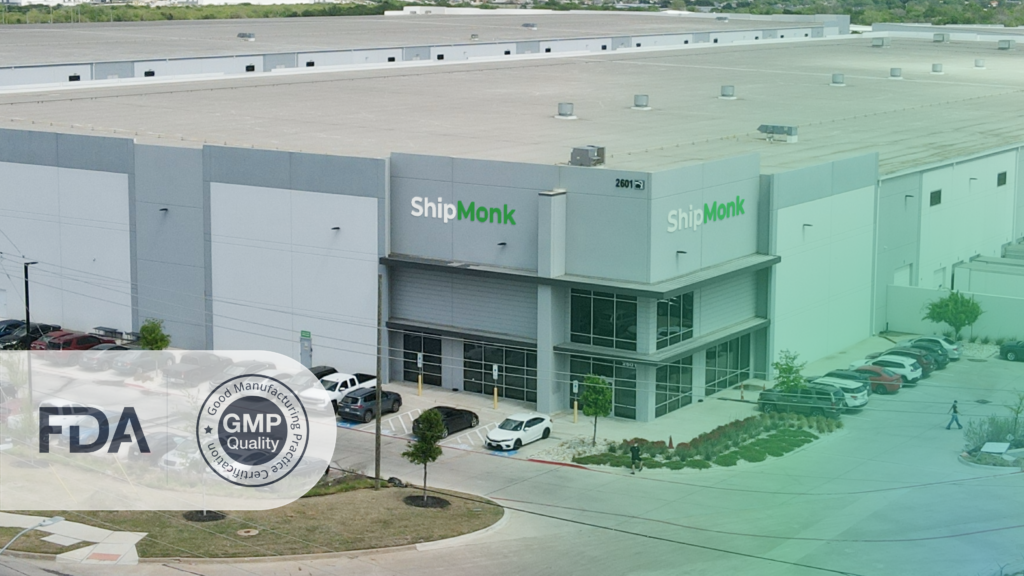
1. Is every facility FDA-registered? Not we work with FDA-registered partners. Not most of our facilities. Every facility. Continuously renewed. Establishment numbers available on request.
2. How is lot data captured and stored? Where in the platform does it live? Can the brand-side user pull a lot history report? How is it tied to the order level? If the answer involves spreadsheets, walk away.
3. What’s the recall response process? Ask for the playbook. A 3PL that can’t articulate the recall workflow doesn’t have one.
4. How are returns of consumables handled? Supplement returns aren’t apparel returns. The FDA limits what can be resold. Ask about disposition. Ask about documentation.
5. Can you walk us through an audit packet you produced this quarter? This is the question that separates real compliance partners from ones who use the word.
Certifications to verify, not just hear about
FDA registration: verify the establishment number on the FDA database. It’s public.
GFSI / BRCGS: ask which facilities are certified, at what grade, and when the last audit was. The certificate number is verifiable.
cGMP: ask to see the SOPs. A good partner will share them.
SOC 2 Type II: covers the platform side. Make sure your inventory and customer data are handled under audited controls.

Create Wellness runs a subscription-led supplement business where every cycle is a brand promise to a community of customers expecting consistency. ShipMonk’s lot tracking and FEFO enforcement keep every subscription box honoring that promise. When the brand expanded its SKU mix and started conversations with major retailers, the compliance infrastructure was already in place. Growth didn’t require rebuilding the operation. It required scaling what was already working.
The transition test
A 3PL that can’t articulate the migration plan is a 3PL that has never done one well. Ask for the playbook. Ask how lot history transfers. Ask how they handle retailer routing guide updates. Ask what a phased cutover looks like for your specific category.
Red flags
We can pull that documentation for you. (Translation: we don’t have it.)
Compliance varies by facility. (Translation: only some of our facilities meet the standard.)
We work with FDA-registered partners. (Translation: we don’t own the registration.)
That’s never come up before. (Translation: they’re not ready when it does.)
Talk to a specialist
Scale your brand. Not your risk. Book a compliance review with a ShipMonk specialist and we’ll walk you through what a true supplement specialist looks like.
Frequently asked questions
What should I look for in a supplement 3PL before asking about pricing?
Before evaluating pricing, confirm a supplement 3PL has category-specific protocols in place. Ask how many supplement brands they currently ship, whether they’ve handled an FDA inquiry for a client, and what their response process looks like. Generic answers signal a generalist operation — not one built for the compliance requirements supplements actually carry.
Does a supplement 3PL need to be FDA-registered?
Every facility a supplement 3PL uses should be FDA-registered — not just some, and not through a third-party partner arrangement. FDA registration signals the facility meets federal dietary supplement storage and handling standards. Our guide on FDA-registered 3PLs for supplement brands explains what that registration actually covers and what to verify.
What compliance certifications should a supplement 3PL have?
A supplement 3PL should hold cGMP certification (Good Manufacturing Practice), FSMA compliance documentation (Food Safety Modernization Act), and SOC 2 Type II for platform-side data handling. Ask for current certificates, not past ones. A partner with nothing to hide shares documentation proactively — if you have to push for it, that’s the answer.
How does lot tracking work at a supplement 3PL, and why does it matter?
Lot tracking at a supplement 3PL means every inbound carton is matched to a lot number and expiration date at receiving — and that data follows every pick and shipment. If a recall happens or an FDA auditor requests traceability records, you can pull the documentation immediately. Without lot-level tracking, you’re guessing.
What’s the difference between FEFO and FIFO, and which does ShipMonk use for supplements?
FEFO (First-Expired, First-Out) picks inventory by expiration date; FIFO picks by receipt date. For supplements, FEFO is the only approach that prevents expired product from reaching customers. ShipMonk enforces FEFO for supplement SKUs — see our deep dive on FEFO inventory management for how the pick logic works at the warehouse level.
What red flags should I watch for when evaluating a supplement 3PL?
Watch for vague answers on documentation, fulfillment SLAs that exclude compliance steps, and 3PLs that can’t articulate a migration playbook. If a 3PL has never transferred lot history from another warehouse, that’s a structural gap — not a process gap. Supplement brands can’t afford a fulfillment partner that learns on your inventory.
How do I know if a supplement 3PL can support retail and DTC at the same time?
A supplement 3PL that supports both retail and DTC should have EDI capabilities, retailer routing guide compliance, and experience managing chargebacks. Ask for examples of brands that scaled from DTC into major retail through their network. Our 3PL audit-readiness checklist covers the documentation retailers typically require before approving a new fulfillment partner.
What should a supplement 3PL’s onboarding process look like?
A supplement 3PL’s onboarding should include a documented migration plan: how lot history transfers, how retailer routing guides get configured, and what a phased cutover looks like for your SKU mix. Any partner that can’t walk you through this in detail has probably never executed a clean handoff for a supplement brand.