Shipping is where ecommerce brands win or lose customers. A package that arrives late, damaged, or unexpectedly expensive can erase a great product experience overnight. The good news: with the right carrier strategy—and the right fulfillment partner—you can turn shipping into a genuine competitive advantage.
This guide covers everything you need to know about the four major U.S. shipping carriers, how to choose among them, and how partnering with a third-party logistics (3PL) provider like ShipMonk can unlock better rates, smarter routing, and faster delivery for your customers.
| 📦 Quick takeaway: Relying on a single carrier limits your flexibility and leaves money on the table. The smartest ecommerce brands use multiple carriers—automatically routed by a 3PL—to optimize every order. |
What Actually Drives Your Shipping Costs
Before comparing carriers, you need to understand the four variables that determine what you’ll pay on every shipment. Every major carrier uses these same core factors:
- Actual weight: The physical weight of your package. Heavier items cost more to ship—straightforward, but often underestimated when packaging is added.
- Dimensional weight (DIM weight): Carriers don’t just charge for how heavy a package is—they also charge for how much space it takes up. DIM weight is calculated as length × width × height divided by a carrier-specific divisor. If your DIM weight exceeds actual weight, you’re billed on DIM weight.
- Shipping zones: The farther a package travels from your fulfillment center, the higher the zone (typically 1–8 in the U.S.) and the greater the cost. Distributing inventory closer to your customers is one of the most powerful ways to reduce zone-based costs.
- Delivery speed: Ground, 2-day, overnight—each tier carries a significant price difference. Aligning the right speed tier to customer expectations (and your product margins) is key to a profitable shipping strategy.
Mastering these four levers is the foundation of any cost-effective shipping strategy.
Shipping Labels: Your Package’s Passport
A shipping label is more than a sticker—it’s the operational backbone of every order. Without a correctly generated label, even the best carrier network can’t get your package where it needs to go.
Every shipping label includes:
- Sender and recipient addresses
- Package weight and dimensions
- Service class (Ground, 2-Day, Overnight, etc.)
- A unique tracking number and scannable barcode
Labels are also your integration point with fulfillment technology. A well-structured label generation system—like ShipMonk’s—automatically selects the right carrier and service, prints the label, and triggers tracking updates without any manual intervention.
The Four Major Shipping Carriers: A Head-to-Head Breakdown
The U.S. ecommerce market is served by four dominant carriers, each with distinct strengths. Understanding what each does best helps you match the right carrier to the right shipment—and stop overpaying for services you don’t need.
| Carrier | Best For | Max Weight | Top Strength | Watch Out For |
| USPS | Small, lightweight items (apparel, cosmetics, books) | 70 lbs | Cost-effective last-mile; Priority Mail Cubic pricing | International reliability can vary |
| UPS | Large, heavy, or high-value items (furniture, electronics) | 150 lbs | Reliability, tracking, and bulky shipment handling | International rates without 3PL negotiation |
| FedEx | Fast delivery & perishables (overnight, cold-chain) | 150 lbs | Overnight/express speed; cold-chain packaging up to 96 hrs | Premium pricing on express services |
| DHL | International ecommerce (220+ countries) | No standard limit | Global reach; DHL Express 2–4 business day delivery | Volume minimums can exclude smaller brands |
USPS — The Last-Mile Value Leader
As the only carrier with access to every residential mailbox in the United States, USPS has a structural advantage in last-mile delivery. For ecommerce brands shipping items under 5 lbs, it’s often the most affordable option available.
What makes USPS especially attractive is Priority Mail Cubic pricing, which bases cost on package dimensions rather than weight—a significant saving for small, dense products. USPS also includes tracking at no additional cost, making it easy to keep customers informed.
Where USPS falls short: International service can be inconsistent, and delivery times for non-Priority services are less predictable than UPS or FedEx.
UPS — The Heavy-Haul Specialist
Best for: Large, heavy, or high-value shipments — furniture, electronics, industrial goods, luxury items
UPS can handle packages up to 150 lbs and is the go-to carrier for B2B and high-value shipments that require reliable tracking and proof of delivery. Their network is built for predictability—if your customers expect a delivery on a specific day, UPS delivers.
For the most time-sensitive needs, UPS Express Critical offers 24-hour global delivery. And while UPS rates are higher at retail, brands working with a 3PL can access negotiated volume discounts that dramatically lower per-shipment costs.
Where UPS falls short: International shipping rates can be expensive without negotiated pricing, and dimensional weight calculations can catch brands off guard on larger packages.
FedEx — The Speed and Specialty Expert
FedEx built its brand on the promise that packages will arrive when promised. For brands where delivery timing is a competitive differentiator—think subscription boxes, event supplies, or perishable products—FedEx is the natural choice.
Their specialty logistics capabilities are particularly notable. FedEx’s proprietary cold-chain packaging can keep perishables at optimal temperature for up to 96 hours, making them one of the few carriers equipped to ship food, pharmaceuticals, and wellness products safely.
Where FedEx falls short: Premium pricing is the trade-off for premium speed. Without 3PL-negotiated rates, FedEx can be significantly more expensive than USPS or UPS for standard shipments.
DHL — The Global Commerce Enabler
If you’re selling internationally—or planning to—DHL is in a class of its own. Their global network spans 220+ countries and territories, and DHL Express can deliver internationally within 2–4 business days end-to-end.
For brands just entering international shipping, DHL eCommerce offers a cost-efficient option for lighter packages by partnering with local postal services for final-mile delivery. It’s a smart entry point for cross-border growth without the premium express price tag.
Where DHL falls short: Volume minimums can make it difficult for smaller brands to access DHL’s best pricing. A 3PL partner is often the most practical way to unlock DHL’s rates at any order volume.
Why a 3PL Partner Is Your Shipping Secret Weapon
Managing carrier relationships, negotiating rates, optimizing routing, and handling exceptions across multiple providers is a full-time job—one that pulls your attention away from product, marketing, and growth. That’s the problem a 3PL solves.
Here’s what a strong 3PL partner like ShipMonk delivers:
- Pre-negotiated carrier rates: Because 3PLs ship at massive volume across all their clients, they unlock carrier discounts most brands can’t access on their own—often 30–50% below retail rates.
- Virtual Carrier Network (automatic routing): Every order is automatically matched to the best carrier and service based on weight, destination, delivery speed, and cost. No manual decision-making. No missed savings.
- Strategic inventory placement: Storing inventory in fulfillment centers near your customers (East Coast, West Coast, Central hubs like Dallas or Chicago) reduces shipping zones, cuts costs, and speeds up delivery.
- Operational resilience: When a carrier experiences delays, surcharges, or network disruptions, a 3PL automatically reroutes shipments to the best available alternative—protecting your customer experience without any action on your part.
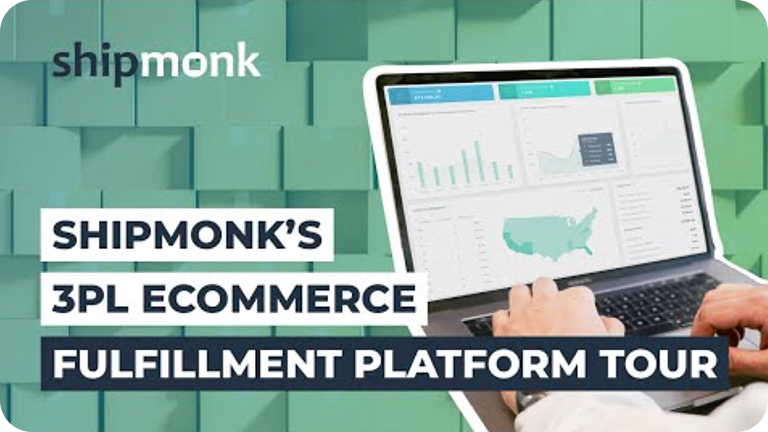
- Integrated fulfillment technology: Real-time inventory visibility, automated label generation, order tracking, and analytics—all in one platform, connected to your ecommerce stack.
| ShipMonk operates 12+ fulfillment centers across the U.S. and internationally, with 99.8% on-time shipping and 99.95% order accuracy. Our Virtual Carrier Network automatically selects the most cost-effective carrier for every single order. |
The bottom line: a 3PL doesn’t just save you money on shipping—it gives you back the time and mental bandwidth to focus on what actually grows your brand.
Frequently Asked Questions
How can I lower my shipping costs?
Start with packaging—right-sizing your boxes reduces dimensional weight charges, which can be a significant hidden cost. If your order volume is high enough, negotiate directly with carriers. And if you’re not already working with a 3PL, that’s often the highest-leverage move: 3PLs like ShipMonk provide access to pre-negotiated volume discounts and automatically route each order to the cheapest qualifying service.
Which shipping carrier is the most reliable?
It depends on the shipment. UPS and FedEx lead for domestic reliability and tracking granularity. DHL is the benchmark for international reliability. USPS has made significant infrastructure improvements and is highly reliable for domestic Priority Mail—and unbeatable for last-mile delivery to rural or residential addresses. Working with a 3PL means you’re never locked into a single carrier’s reliability.
When should I offer free shipping?
Free shipping works best as a threshold offer (e.g., “Free shipping on orders over $75”) rather than a blanket policy. The threshold drives higher average order values, and building shipping cost into your product pricing protects your margins. Just make sure your average shipping cost is factored into your unit economics before you launch the offer.
What’s the difference between a shipping carrier and a 3PL?
A shipping carrier (UPS, FedEx, USPS, DHL) physically transports packages from point A to point B. A 3PL (third-party logistics provider) like ShipMonk manages your entire fulfillment operation—receiving inventory, storing it, picking and packing orders, and shipping them through whichever carrier combination is most efficient. Think of the carrier as the truck, and the 3PL as the logistics brain that decides which truck to use and when.
How does a 3PL save my business money on shipping?
Three primary ways: (1) bulk carrier discounts your brand couldn’t negotiate independently, (2) distributed inventory placement that reduces shipping zone distances, and (3) automated carrier selection that always picks the cheapest qualifying option for each order. Over time, these savings typically far exceed the cost of 3PL services.
Ready to Build a Smarter Shipping Strategy?
Shipping is one of the highest-leverage areas in your ecommerce business—and one of the most commonly under-optimized. The brands that win long-term aren’t just choosing the cheapest carrier; they’re building flexible, data-driven fulfillment systems that can adapt as they grow.
ShipMonk helps ecommerce brands do exactly that: smarter carrier selection, strategic inventory placement, and the technology to connect it all—so you can stop stressing about logistics and start delivering experiences your customers remember.
Ready to see what smarter shipping looks like for your brand? Talk to a ShipMonk fulfillment expert today.
About the Author
Jonathan Briggs is the Senior Vice President of Sales at ShipMonk, with over two decades of expertise in ecommerce fulfillment, transportation, and automation. Jonathan leads high-performing sales teams in delivering scalable fulfillment and delivery solutions across Apparel, Footwear, Health & Beauty, CPG, Home Goods, and Nutraceuticals—helping brands achieve operational excellence and sustainable growth.