In the fast-paced world of ecommerce, the question isn’t just what you sell, but how it gets to the doorstep. As we move through 2026, the lines between “global” and “local” are blurring, yet the strategic choice between Cross-Border and Local Fulfillment remains one of the most critical decisions for a scaling brand.
Should you ship everything from a central hub across the world, or plant roots in every market you serve? Let’s break down the pros, cons, and the “hybrid” middle ground that is dominating the industry this year.
1. Cross-Border Fulfillment: The “Test and Learn” Gateway
Cross-border fulfillment involves shipping orders directly from your home country (or a primary hub) to international customers. Each package crosses a border, clears customs, and is delivered via international carriers.
The Pros:
- Low Upfront Cost: You don’t need to lease overseas warehouses or split your inventory.
- Centralized Control: Managing one pool of inventory is significantly simpler for your operations team.
- Market Testing: It’s the perfect way to “dip your toe” into a new country without a massive capital investment.
The Cons:
- The “Customs Wall”: Even with 2026’s AI-driven customs automation, packages can still face unpredictable delays.
- Higher Shipping Costs: Individual international shipments are almost always more expensive than domestic ones.
- The “DDP” Dilemma: Customers hate surprise “Duties and Taxes” at the door. If you don’t use Delivered Duty Paid (DDP) shipping, you risk high return rates and unhappy reviews.
2. Local Fulfillment: The “Amazon-Speed” Standard
Local fulfillment (or localized fulfillment) means storing your inventory in the same country or region as your customers. You ship in bulk to a local 3PL (like one of ShipMonk’s international hubs) and fulfill orders domestically.
The Pros:
- Lightning Speed: Shifting from 10-day international shipping to 2-day domestic shipping is a conversion rate booster.
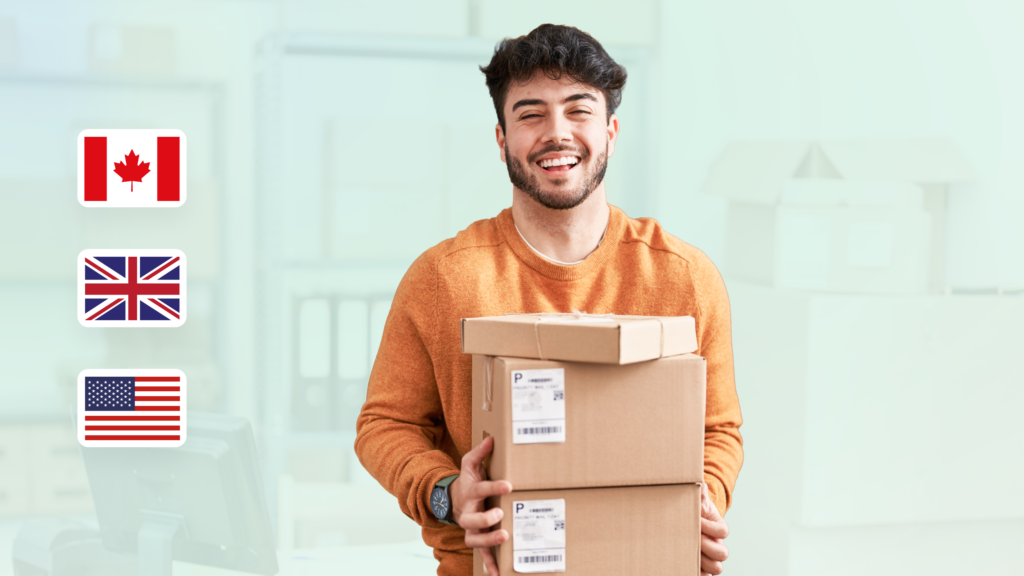
- Lower Last-Mile Costs: Shipping a package from Manchester to London is a fraction of the cost of shipping from Miami to London.
- Easier Returns: Local returns are simpler for the customer and cheaper for you to process and restock.
The Cons:
- Inventory Fragmentation: You have to decide which products to “park” in which country, which can lead to stockouts in one place and overstock in another.
- Higher Complexity: You’ll need to navigate local tax laws (like VAT in the EU) and potentially higher storage fees.
The Comparison at a Glance
| Feature | Cross-Border | Local Fulfillment |
| Speed | 7–14 Days | 1–3 Days |
| Setup Cost | Low | High |
| Complexity | Low (Single Inventory) | High (Distributed Inventory) |
| Customer Experience | Average (Potential fees/delays) | Excellent (Native feel) |
| Best For | New markets & low-volume SKUs | Established markets & “Hero” products |
3. The 2026 Trend: The “Hybrid” Approach
Most successful brands in 2026 aren’t choosing one or the other—they are doing both. This is known as Hybrid Fulfillment.
How it works:
- Localize your “Hero” SKUs: Keep your best-selling items in local warehouses in your top 3 markets (e.g., US, UK, and EU).
- Cross-Border your “Long-Tail”: For niche products or testing new regions, ship cross-border from a central hub to keep your inventory lean.
How to Choose Your Move
If you’re wondering when to make the switch from cross-border to local, look at your data.
- The “Volume Trigger”: If you are shipping more than 500–1,000 orders per month to a specific country, the shipping savings from local fulfillment usually outweigh the extra storage costs.
- The “Competitor Benchmarking”: If your local competitors are offering next-day delivery and you’re still at 10 days, you’re losing the “Buy Box” in the customer’s mind.
Final Thoughts
In 2026, ecommerce is no longer about geographic boundaries; it’s about proximity to the person. Whether you’re utilizing a global 3PL network to stay local or optimizing your cross-border lanes with better tech, the goal remains the same: a seamless, “borderless” experience for the person clicking “Buy.”
Ready to scale your international footprint? Contact ShipMonk today to see how our global fulfillment network can help you grow without the logistics headache.