By the time a merchant’s peak season order ships, ShipMonk’s transportation team has already spent months negotiating it into place: carrier contracts, surcharge timing, capacity plans, all invisible to the merchant and all the reason the order goes out on time.
Carrier surcharges get announced in July. Capacity gets tight in November. And every merchant, no matter their size, is trying to answer the same question: will my orders get out the door on time?
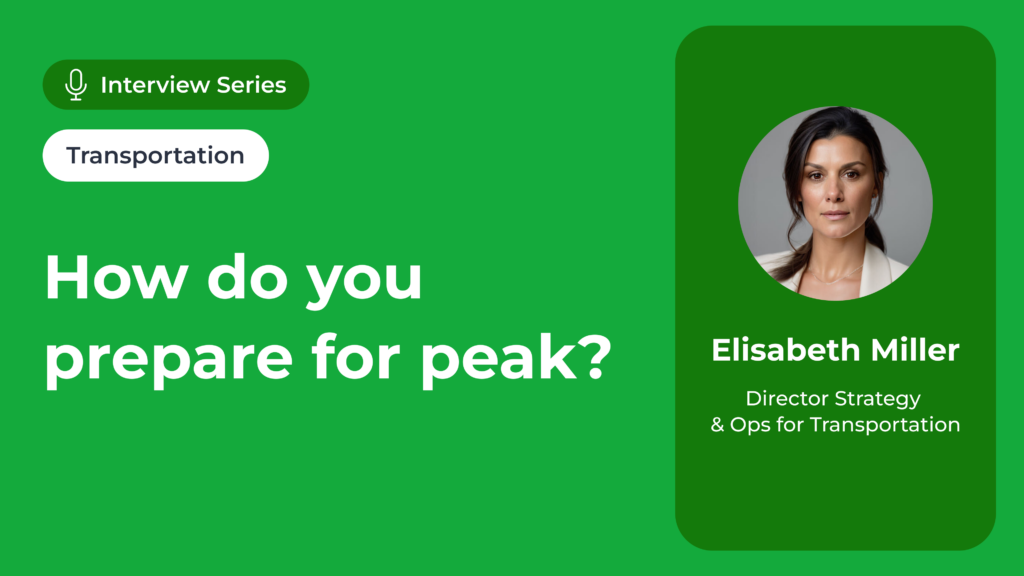
For Elisabeth Miller, Director of Strategy and Operations for ShipMonk’s transportation team, that question is the whole job. “Merchant first to me means staying a step ahead and always thinking about how the decisions we make are ultimately going to impact our merchants,” she says. “Our job is to anticipate the challenges, understand where we may have risk, and have those contingency plans in place so we can adjust quickly when something changes.”
That mindset is exactly what powers ShipMonk’s Say Yes campaign this peak season: merchants shouldn’t have to say no to an opportunity because fulfillment couldn’t keep up.
Say Yes to Trusting the Experts
Ask Elisabeth what Say Yes means from her seat, and the answer is simple: “ShipMonk helps merchants say yes to thinking outside the box and trusting ShipMonk to deliver excellence on their behalf.”
That trust isn’t abstract. It shows up in the unglamorous, essential work that happens months before a single peak order ships: carrier contract negotiations, surcharge planning, capacity forecasting, and building redundancies for the things nobody can predict.
Planning Peak Starts the Day the Last One Ends
Peak planning at ShipMonk isn’t a fourth-quarter scramble. “Planning on the transportation team ultimately starts at the end of last peak,” Elisabeth explains. Every season generates lessons, and those lessons shape the next one.
By the time peak officially arrives, months of groundwork are already in motion. Carriers start announcing their peak surcharges as early as July, and ShipMonk’s team is negotiating those terms on merchants’ behalf well before most businesses are thinking about the holidays. FedEx’s surcharges typically start at the end of September, UPS tends to follow, and most surcharges run through the middle of January. These are details most merchants would never have the bandwidth to track carrier by carrier.
Managing that complexity is the point. Carrier contracts can run 80 pages, packed with terms most merchants never see. ShipMonk’s transportation team exists to translate all of it, rates, commitments, fine print, into something merchants can actually use, without the jargon.
More Options Mean Fewer Reasons to Say No
For decades, small parcel shipping was a two-carrier game. “FedEx and UPS have owned the industry. There’s been this duopoly for the last 40 years,” Elisabeth says. That’s changed fast: in just the last five years, roughly 60 regional carriers have entered the market.
ShipMonk evaluates those options with real data and real experience, not just marketing claims, comparing transit times, rates, and visibility against the national carriers merchants already know. The payoff during peak is flexibility. If one carrier hits a capacity wall, ShipMonk can shift volume to another, so a merchant’s fulfillment doesn’t grind to a halt because of a single point of failure.
That performance is measured, not assumed. ShipMonk scores every carrier weekly on metrics like on-time delivery, delivery exceptions, and how quickly packages are scanned into a carrier’s network. “We hold our carriers to the highest standards for our merchants,” Elisabeth says.
ShipMonk has also been expanding where merchants can say yes to shipping in the first place. The recently launched International Bridge, connected to ShipMonk’s carrier network, automatically routes shipments to Hawaii, Alaska, Puerto Rico, and Guam with far less manual work. It’s a service many merchants don’t even realize is available to them through their shopping cart.
Partnership Is the Real Contingency Plan
When asked how ShipMonk makes sure fulfillment is never the reason a merchant has to say no to an opportunity, Elisabeth points to partnership over process. “ShipMonk has really incredible partner relationships with our merchants, which is what allows us to stay in front of their needs. We peak plan with our merchants to ensure we have the inventory, the packaging, and we’re aware of when their sales are going to happen, so we can plan capacity with the carriers.”
That two-way visibility is what turns planning into confidence. It’s also what lets Elisabeth head into her first peak at ShipMonk feeling ready rather than anxious: “I’m feeling really positive about my first peak at ShipMonk. Really looking forward to seeing all the planning we’ve done throughout the year come to life. I think we have a strong understanding of where potential constraints may be, and we’ve put the right plans and contingencies in place to make sure we’re positioned to handle the volume.”
The Bottom Line
Peak season will always bring surprises. Weather delays shipments. Carriers hit capacity. Demand spikes faster than anyone forecasted. What separates a smooth peak from a stressful one is the work that happens before any of that happens: the contracts negotiated, the carriers vetted, the capacity planned months in advance.
That’s the promise behind ShipMonk’s Say Yes campaign: merchants get to focus on growing their business and taking the next opportunity, while ShipMonk’s transportation team handles the complexity behind the scenes.