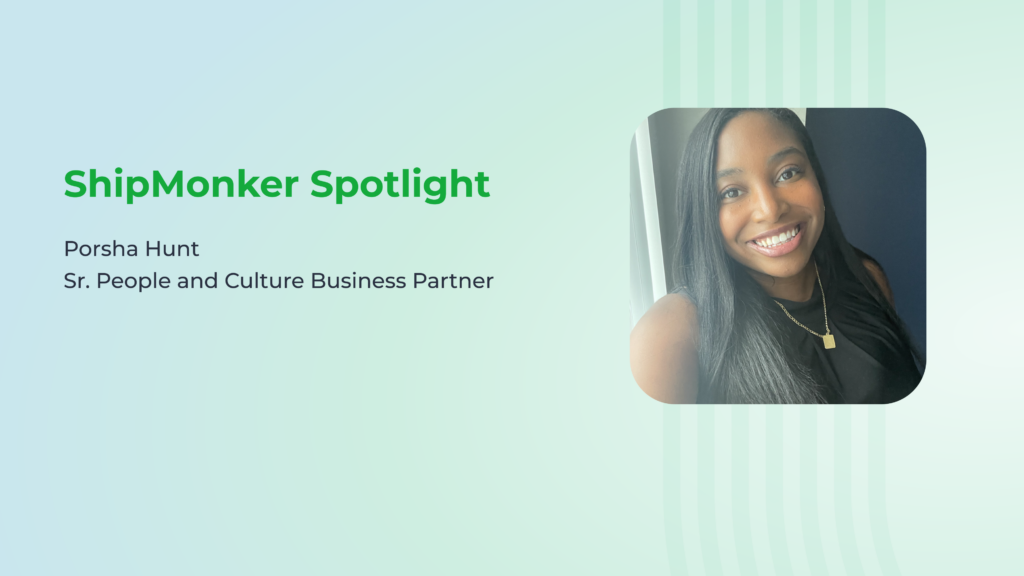
A little over a year ago, Porsha Hunt joined ShipMonk as a Senior People and Culture Business Partner, supporting everything from marketing and sales to finance and strategy. Getting there took a winding path through event planning, agency recruiting, and six years at Chewy, and along the way she picked up a clear point of view on what HR is actually for.
From Events to Recruiting to HR Business Partner
Porsha’s path into HR wasn’t a straight line. Fresh out of college, she juggled two roles at once: event planning and recruiting. She loved event planning (she still does, and jokes that she’ll happily host and plan things to this day), but the travel and weekend work made it hard to stay close to a large family spread across the Midwest and Arizona. So she made a bold move, relocating from Ohio to Florida and landing both an apartment and a new job in agency recruiting in a single weekend.
Recruiting taught her the fundamentals fast: it’s high-energy, high-volume work. But after a while, she found herself wanting more than just getting people in the door. “I really wanted to see what happens after they get in,” she says. That curiosity pulled her toward HR generalist work and, eventually, the HR business partner path she’s built her career around.
Before joining ShipMonk, Porsha spent six years at Chewy, where she moved across several teams and learned the ropes of HR at a company that grew from scrappy startup to major enterprise. Her final stint there was supporting a team of in-house veterinarians and doctors, interesting work, she says, but not quite her speed. She was ready for something different, and when a recruiter reached out about a role supporting ShipMonk’s revenue organization and finance teams, she started paying attention. A conversation with ShipMonk’s VP of People sealed it: she understood the business, saw the opportunity, and was sold.
A Day in the Life
Porsha joined ShipMonk in late April of last year as an individual contributor, and her plate has been full ever since. She supports the full revenue org (marketing, RevOps, sales, customer support, and merchant success) plus finance, accounting, FP&A, and strategy and operations.
It’s a lot of ground to cover, but that’s exactly what she likes about it. “To be a good business partner, you need to understand the business,” she says. Being able to pivot across departments and learn how each one operates keeps the work exciting.
On any given day, that might mean establishing new policies, coaching managers through organizational design questions, or helping a leader think through what their team actually needs to grow. A lot of her time goes toward being a thought partner rather than a rule enforcer, asking managers not just what they want to change, but why, and what the org looks like a year down the road if they make that change. She also plays a quiet but important role in internal mobility, helping strong performers move into new opportunities across the company rather than watching them walk out the door.
Comfort in Ambiguity
ShipMonk may be an established company, but Porsha describes its culture as still very much startup energy, plenty of ambiguity, and plenty of room to build. That’s a feature, not a bug, for her. Coming from e-commerce, she’s had to learn the language of 3PL and fulfillment operations from the ground up, and she’s leaned into conversations with leaders across the business to close gaps and share context between teams that might not otherwise talk to each other.
The Part of the Job Nobody Sees
Ask Porsha about her proudest moments, and she’ll tell you most of them will never be public. That’s simply part of the territory in HR. Some of the most meaningful work happens in one-on-one conversations that stay private: coaching a leader through a hard decision, advocating for an employee, or helping someone map out what their next role could look like, whether that’s within ShipMonk or somewhere else entirely.
“Business cannot survive without treating your employees well,” she says. That belief, more than any policy or process, is what she brings to the table every day, and it’s a big part of why the teams she supports keep coming back to her.
A little over a year in, Porsha says she’s still relatively new to ShipMonk, but the fit was clear from her very first conversations here. As she puts it about the people she works with: everyone shares the same mindset of figuring out how to get things done and move the needle forward. It’s the kind of culture she was looking for, and the kind she’s helping build.